A garage door spring lasts for a set number of open-and-close cycles, not a set number of years. How long should a garage door spring last depends on its cycle rating, how often the door moves, and the condition of the whole system. Watch for changes in movement or sound, and stop using the door if it seems unsafe.
Garage door springs help carry the weight of a heavy door as it moves. If a spring breaks, the door may become hard to lift or unsafe to use. Knowing the warning signs can help homeowners, business owners, and property owners keep people and vehicles clear while they arrange help.
Table of Contents
- How long should a garage door spring last?
- What factors shorten a garage door spring’s lifespan?
- What types of garage door springs are there?
- How can you tell if a garage door spring is broken?
- Why are garage door springs replaced in pairs?
- Why is replacing a garage door spring not a DIY job?
- How do lift cables relate to garage door springs?
- Can garage door maintenance help springs last longer?
- Can you keep using a garage door with a broken spring?
- When should you call a garage door repair professional?
- Key takeaways
- Frequently Asked Questions
- Conclusion
How long should a garage door spring last?
A garage door spring is made to handle a certain number of open-and-close cycles. One cycle means the door opens and closes once. The spring’s cycle rating gives a helpful guide, but it does not tell you exactly how many years it will last in your home or building.
What does a spring’s cycle rating mean?
A cycle rating is the number of door cycles a spring is made to handle under expected conditions. It is not a promise of an exact service life. A household that opens its door many times each day may reach the spring’s rated cycles sooner than a household that uses its door less often.
The spring is also one part of a larger system. The door, tracks, rollers, cables, and opener all affect how smoothly it moves. A spring that suits the door may still wear sooner if another part sticks, drags, or is out of line.
Why can actual service life differ from the rating?
A spring’s rating cannot account for every home, building, or daily routine. How often the door moves, moisture, dirt, rust, and poor balance can all affect wear. A spring that is not right for the door’s weight may also face extra strain. A technician can check the spring and the rest of the door to help find the cause of a change.
In Kingston, the weather and the way a home uses its garage can shape upkeep needs. Kingston Garage Door Repair can help property owners understand whether a spring looks worn or has failed. The cycle rating is a useful guide, while the door’s movement and sounds can show when it needs attention.
What factors shorten a garage door spring’s lifespan?
Frequent use, poor balance, rust, and worn parts can shorten a spring’s working life. A spring does not work alone. If the door drags or weighs more than the spring is made to lift, the spring can face added stress each time the door moves.
How do door use and household routines affect spring wear?
Each full opening and closing adds a cycle. A door used by several drivers throughout the day may move more often than a door used mainly for storage. The number of cycles is only one part of spring life, but it helps explain why similar springs may wear at different rates.
A door that is left partway open or used while it is struggling can also put stress on its parts. The opener is not meant to make a heavy or damaged door safe to move. If the door hesitates, jerks, or makes a new sound, stop using it and arrange a check. Do not keep asking the opener to pull a door that may have a problem.
Can rust, temperature, or poor balance cause early failure?
Rust can weaken metal and make moving parts work less smoothly. Temperature changes can affect metal parts and door movement, while poor balance makes the spring work harder than it should. Dirt or worn rollers may also make the door drag. Each problem can add strain, even if the spring seemed fine before.
Homeowners can notice a change without touching or adjusting the spring. Watch whether the door moves evenly, listen for new sounds, and look for damage from a safe place. If the door looks crooked or feels unusually heavy, keep clear and ask a trained technician to check it. Do not try to adjust a spring to fix a balance problem yourself.
What types of garage door springs are there?
Most home garage doors use torsion springs or extension springs. Both types help lift and lower the door, but they sit and work in different ways. The right kind depends on the door’s design and weight, so one type is not a simple replacement for the other.
How do torsion springs work?
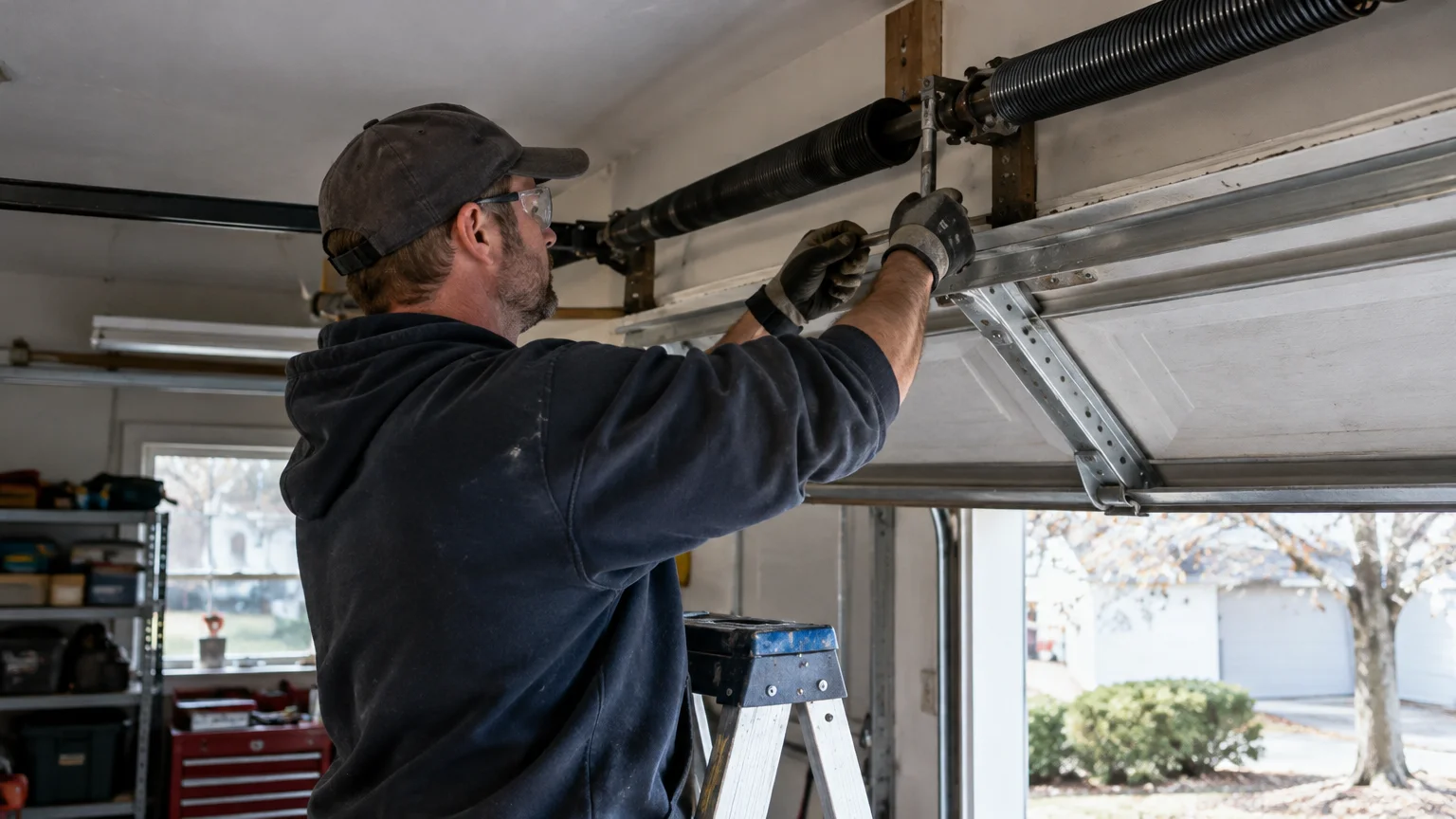
Torsion springs sit on a metal shaft above the door opening. As the door moves, a spring twists and releases force to help lift it. That stored force is held under tension. A broken spring may show a gap in its coil, though some breaks are hard to see from the ground.
The spring can move with great force if someone handles it the wrong way. Homeowners should not loosen, wind, or remove a torsion spring. A trained technician has the right tools and knows how to work around the force held in the spring.
How do extension springs differ?
Extension springs are usually along the sides of the door tracks. They stretch as the door closes and help lift it as it opens. Safety cables may run through them to help hold a broken spring in place. The setup can differ by door, and a safety cable does not make a spring safe to handle.
Both types of spring can break and need careful repair. From a safe place, a homeowner may be able to see that a spring looks broken or out of place. Do not touch the spring, cable, or bottom bracket. Kingston Garage Door Repair can check the system and identify the spring type before suggesting a repair.
How can you tell if a garage door spring is broken?
A loud bang, a door that will not lift, a gap in a spring, or a crooked door can point to a broken spring. These signs can also come from other problems, so they do not prove the cause by themselves. Keep people and vehicles away, and do not try to move the door by hand.
What visible and audible signs should you look for?
A broken spring may leave a gap in a coil above the door or along its sides. The door may look uneven, move only a short way, or stay shut. Some people hear a loud bang when a spring breaks. The spring may snap even when nobody sees the break happen.
A loose cable, a door that hangs at an angle, or a new scraping sound also needs attention. Do not stand under the door to inspect it closely. Look from a safe distance, and do not pull a cable or touch a spring. If the door seems unstable, keep the area clear.
Why might a door stop opening when a spring fails?
A spring helps carry much of the door’s weight. If it breaks, the opener may sense too much resistance and stop. It may also strain while trying to lift the door. The opener cannot replace a working spring. Pressing the remote again and again can make the problem worse or harm other parts.
A door that opens only a little may still be heavy and unsafe. Do not force it up or let it drop. If the opener has a manual release, do not use it to move a door that may not be supported. A professional can secure the door and check whether the spring, cable, opener, or another part has failed.
Why are garage door springs replaced in pairs?
When a door has two matching springs, a technician may suggest replacing both because they have often had similar use. If one breaks, the other may also be worn. Replacing only the failed spring can leave an older spring working beside a new one. That may lead to uneven support or another repair soon after.
How does replacing one spring affect the other?
A pair of springs is often set up to share the door’s weight. If one spring fails, the spring that remains may have to carry more of the load. This extra strain can affect the door’s balance and movement. A new spring paired with a worn one may also respond differently.
This does not mean every door needs two new springs each time. The door’s design, spring condition, and repair history all matter. A technician can check whether the springs match, whether the remaining spring is in good shape, and whether the door moves as it should.
When might a technician recommend replacing only one?
A technician may consider replacing one spring if the door has only one, or if the other spring is newer and in sound condition. The choice should follow a check of the door and its parts. It should not be based only on seeing that one spring is broken.
The technician should also check the balance, cables, rollers, and opener. Recent spring work may matter too. Owners can share what they noticed, such as a bang, a change in movement, or a recent repair. Clear details help the technician check the whole system and explain a safe repair.
Why is replacing a garage door spring not a DIY job?
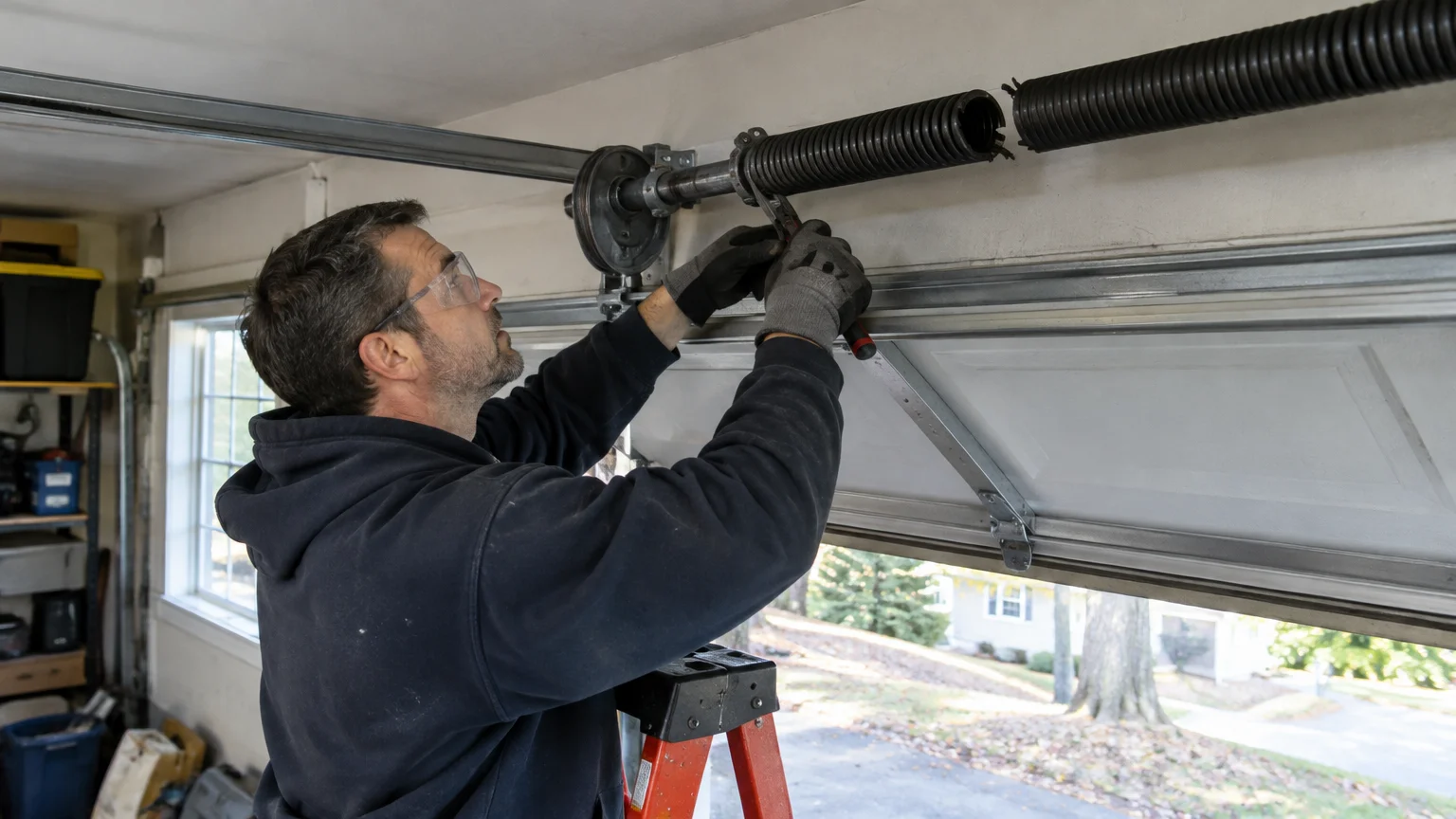
Replacing a garage door spring is not a safe do-it-yourself job because the spring stores force that can release suddenly. Torsion springs, extension springs, tight lift cables, and bottom brackets can cause serious injury if handled the wrong way. This work needs training, the right tools, and a plan to keep the door from moving.
What makes spring tension dangerous to handle?
A loaded spring can turn or snap with great force. Cables and brackets linked to it may also be under tension. If a tool slips, a part breaks, or the door moves at the wrong time, someone nearby can be hurt. The door is heavy and may fall if it is not held safely.
General videos and instructions cannot show the exact state of a specific door. Spring type, door weight, hardware, and damage can all differ. Copying a repair without knowing those details may make the door less safe. Homeowners should not wind, loosen, cut, or remove a spring, cable, or bottom bracket.
What can happen if a repair is done incorrectly?
A poor repair can leave the door out of balance, make it fall, or cause a cable to come loose. It can also put extra strain on the opener and other door parts. A damaged spring may not be the only issue. Checking the full system matters, because changing one part without finding the cause may not fix unsafe movement.
Homeowners can safely watch the door, keep the area clear, and tell a technician what happened. They do not need a professional for simple checks, such as looking for visible damage from a safe place or clearing loose debris near the tracks. Spring and cable work is different. Leave it to someone trained to control the force held in those parts.
How do lift cables relate to garage door springs?
Lift cables help raise and lower the door by working with the spring system. They run along the sides of the door and connect to parts that support its movement. If a cable frays, slips, or breaks, the door can become uneven or unsafe. A cable problem can look much like a spring problem.
What do lift cables do as the door moves?
As a spring helps balance the door, cables guide and support its movement. The cables need to stay in place and work with the springs. If one side fails, the door may hang unevenly or bind in its tracks. This can put added strain on the spring, rollers, and opener.
A cable can come loose for several reasons. There may be spring trouble, poor balance, damaged hardware, or uneven door movement. The cause needs a close check. A cable under tension can be dangerous, so do not pull it back into place or try to remove it.
What signs may indicate a cable problem?
Look for a loose or frayed cable, a door that leans to one side, or movement that is no longer smooth. A cable may be hard to see from a safe spot, so not seeing a problem does not rule one out. If the door looks crooked or makes a new sound, stop using it.
Garage Door Cable Repair is a service for cable problems. If a cable looks out of place, keep clear of it and the door. Do not run the opener to see if the cable will move back into place. A technician can check the cable and spring system together to find what caused the uneven movement.
Can garage door maintenance help springs last longer?
Safe, regular checks can help owners spot wear before the door stops working, but they cannot prevent every spring from breaking. Homeowners can keep the door area clean, watch and listen as the door moves, and follow the maker’s care advice. Leave spring changes and repairs to a trained technician.
Which routine checks are safe for homeowners?
Owners can clear loose debris from the tracks and keep the space around the door open. They can watch the door open and close from a safe place. A change in speed, sound, balance, or movement is a reason to stop using the door and ask for help. These checks do not require touching a spring or cable.
A simple check can include these safe actions:
- Keep people, pets, and stored items clear of the door’s path.
- Look from a safe distance for visible damage, loose parts, or a crooked door.
- Listen for new banging, grinding, or scraping during normal use.
- Stop using the door if it jerks, feels heavy, or moves unevenly.
- Follow the maker’s advice for safe care and routine upkeep.
Homeowners do not need a professional for these basic checks and simple cleaning. They should not test a spring by lifting a heavy door or touch parts under tension. If a check shows a concern, leave the repair to a technician.
Why should spring adjustment and lubrication follow professional guidance?
Changing a spring can change how much force it puts on the door. A wrong change can make the door too heavy, too light, or unsafe. Advice about lubrication can also differ by door and part. The wrong product or the wrong place may not help and could cause another problem.
Follow the care instructions for the specific door and opener. If they are not clear, ask a trained technician instead of guessing. Garage Door Maintenance can include a professional check of moving parts and door balance. Kingston Garage Door Repair can help owners decide if a change in movement needs a closer look. A garage door tune may also help spot wear, but it cannot make a worn spring last forever.
Can you keep using a garage door with a broken spring?
No. Do not use a garage door with a broken spring until a professional has checked and repaired it. The door may be too heavy for the opener, may move unevenly, or may fall. Keep children, pets, cars, and other people away from the door and its path.
What should you do if the door is stuck open or closed?
Do not force the door, keep pressing the remote, or try to lift it alone. If it is stuck open, treat the opening as unsecured and keep people away. If it is stuck closed, do not pull it up or disconnect the opener to move it. The door may not be held safely in place.
Keep the opener controls out of reach while the door is unsafe to use. If it is partly open, do not stand beneath it or leave a vehicle in its path. Contact a professional who can check and secure the door. If someone nearby faces immediate danger, move away and seek suitable emergency help.
How can you protect people, vehicles, and property while waiting for repair?
Keep the area clear and tell everyone at home or work not to use the door. Use another safe entrance if there is one. Do not leave a vehicle under a door that may shift or fall. Avoid touching cables, springs, brackets, or any part that looks loose.
If the garage cannot be secured, move items away from the opening only when it is safe. Do not climb near the door or try to hold it in place with objects. A technician can advise how to keep the area safe while you wait for repair. Acting carefully can help reduce the chance of injury or more damage.
When should you call a garage door repair professional?
Call a professional promptly if a spring looks broken, a cable is loose or frayed, or the door is crooked, heavy, or stuck. These signs can point to a safety risk. Stop using the door until someone has checked it. A trained technician can find the failed part and look over the system around it.
Which spring or cable symptoms need prompt attention?
A loud bang, a gap in a spring, a hanging cable, or a door that will not lift safely all need attention. A door that moves unevenly or stops partway may also have a spring, cable, track, or opener problem. Do not assume the opener is the only problem because the door will not open.
People searching for garage door repair services near me should choose a provider that checks spring and cable safety, not just one that gets the opener running. The same care matters when searching for near me garage door repair or garage door repair closest to me. Local service should start with a careful check and a clear explanation of what to do next.
What information can help a technician assess the problem?
Tell the technician what the door did, when the change began, and whether anyone heard a bang. Say whether the door is open, closed, or partly open, and whether it looks crooked. Mention any recent work on the door or opener. Do not try a test just to gather more information.
If it is safe, a short description of visible damage can help. Nobody should move closer to inspect a spring or cable under tension. Kingston Garage Door Repair serves the main Kingston area, from Ponck Hockie and Wilbur to Saugerties, New Paltz, Rhinebeck, Red Hook, and nearby communities. Contact us to arrange professional help for a broken spring or cable. Kingston property owners can use the Kingston Garage Door Repair site to learn more about the business.
Key takeaways
- A spring’s cycle rating is a guide, not a set number of years.
- Frequent use, rust, poor balance, and worn parts can add strain.
- Broken springs and loose cables can make a door unsafe to use.
- Homeowners can make basic visual checks and keep the area clean.
- Leave spring, cable, and bottom-bracket work to trained professionals.
Frequently Asked Questions
How long should a garage door spring last?
How long a garage door spring lasts depends on its cycle rating, how often the door moves, and the state of the whole door system. The rating does not promise a set number of years. If the door becomes heavy, crooked, or noisy, stop using it and arrange a professional check.
Can a garage door opener lift a door with a broken spring?
An opener may try to move a door with a broken spring, but it should not be used for that job. The spring helps carry the door’s weight, and the opener is not a safe replacement. Continued use can strain the opener or make the door move in an unsafe way. Keep clear and ask a professional to check it.
Why do garage door cables come loose?
A cable may come loose because of spring trouble, poor balance, damaged hardware, or uneven door movement. It may also be part of a larger problem that is hard to see from the ground. Do not pull or reset a loose cable. It may be under tension, so leave the door still and have it checked.
Should both garage door springs be replaced at once?
When a door has matching springs, replacing both may help keep the system balanced, especially if both have had similar use. A technician should check the springs and door before deciding. In some cases, one spring may be suitable to replace alone, such as when the other is newer and in good condition.
Can a garage door be opened by hand after a spring breaks?
Do not try to lift a door by hand after a spring breaks. Without spring support, the door can be very heavy and may fall or move unevenly. Do not use the opener or release the door to test it. Keep people and vehicles away, then have a trained technician secure and check the system.
Conclusion
Garage door springs do not last the same length of time in every home or building. Their cycle rating, daily use, rust, balance, and other worn parts all matter. A broken spring or loose cable can make a heavy door unsafe, so do not keep using it or try to repair it yourself.
Basic visual checks and a clean door area are safe for homeowners. Work on springs, cables, and bottom brackets is not. For urgent spring or cable trouble, Contact us to arrange professional help from Kingston Garage Door Repair.
If you are not sure what you are dealing with, it is worth having someone look at it before it turns into a bigger job. Get in touch with Kingston Garage Door Repair today and we will tell you where you stand.