Garage Door Maintenance in Kingston, NY
Every part that moves or carries weight gets examined, drifted settings are corrected, lubricant goes where it belongs, and wear is flagged before it turns into a breakdown.
For a door in the Kingston area that gets used daily, this is the easiest stage to deal with a worn spring or fraying cable, since it happens on your schedule, not on a morning when the door won't budge.
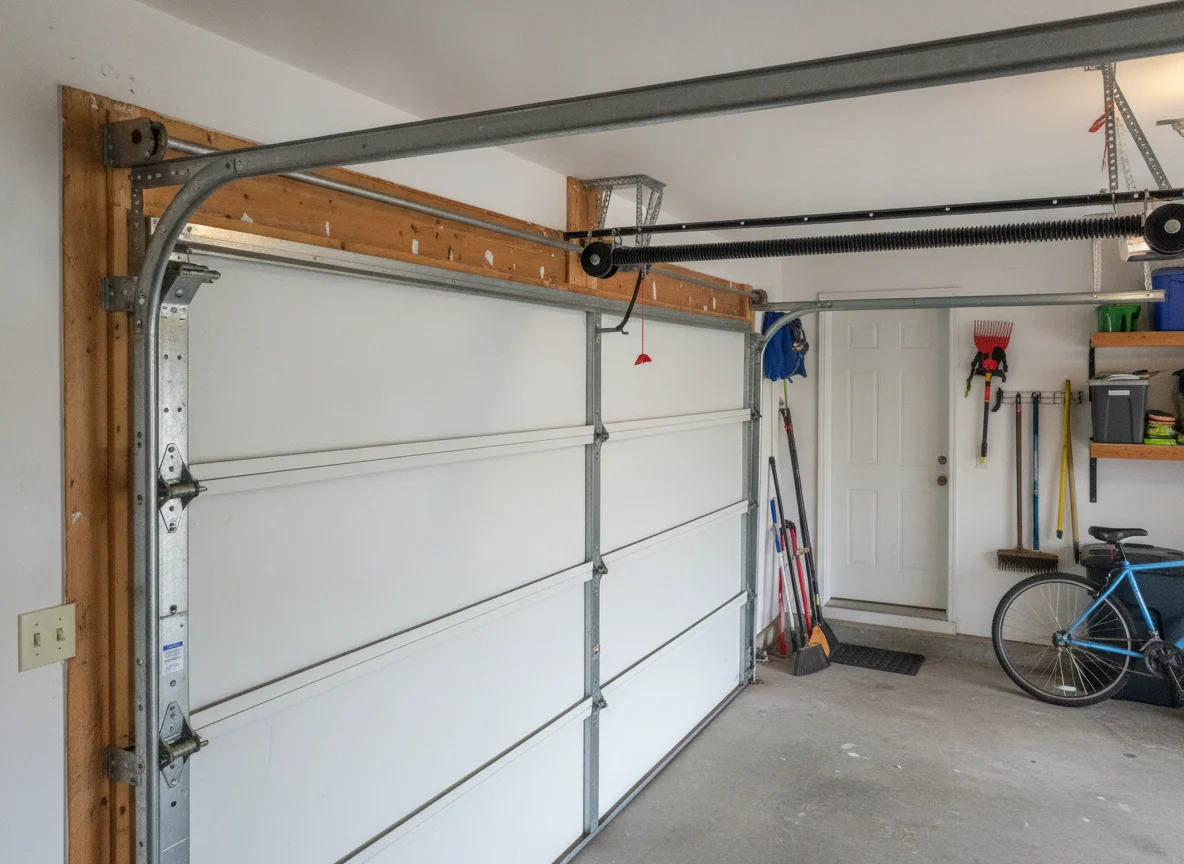
Items on the checklist
Springs
Examined for gaps, stretching, rust and uneven wear, then tested for balance.
Cables
Frayed strands and rust looked for, especially at the bottom brackets, and tension matched left to right.
Rollers, hinges
Rollers that wobble, crack or wear flat get noted; bearings and hinges are oiled.
Track
Checked for dents, bends and slack brackets, then cleaned and set true.
Fasteners
Hinge, bracket and track bolts are tightened, because years of vibration work them loose.
The opener
Slack in the chain or belt, travel stops and closing force are reset.
Safety reversal
A broken beam or a blocked path must reverse the door. In 1993 New York made entrapment protection mandatory.
Weatherstripping and bottom seal checked for gaps that admit rain, drafts and mice.
You should leave knowing what has worn and the reason, then decide whether to act now or just keep monitoring it.
Is the door getting noisy, jerky or sluggish? Tell us what has changed and we'll respond.
Contact UsTime to book
Grinding, squealing or a bang at the end of travel: the door is louder than it used to be.
It judders or loses speed midway.
It bangs shut, or one corner lands well before the other.
The motor sounds strained, as if the load has grown.
Nobody can recall the last time anyone looked it over, and it runs every day.
Say what the door is up to
A few plain words start things off, and you needn't know the name of whichever part has failed.
Checks you can do yourself
Quick checks like these can catch trouble early:
Study the springs and cables once a month from the floor, door closed. Look for gaps between coils and loose or frayed strands, and don't touch either one.
Try the auto-reverse
Lay a 2x4 flat on the floor under the door and close it; the door should reverse on contact, or the opener needs adjusting before more use. The U.S. Consumer Product Safety Commission describes the test.
Check the eyes
Wave a box or a broom through the beam as the door descends; it ought to halt and rise again.
Oil only where it belongs
Hinges, roller bearings and springs take a lubricant made for garage doors. Tracks are better left clean and dry, and grease only collects grit and dust.
Keep the tracks and the floor beneath the door clear, and in winter break any ice bonding the bottom seal to the ground before using the opener. Forcing a frozen door can rip the seal and overload the whole system.
How frequently
Use decides the interval. A door that is the family's usual way in and out, cycling many times a day, deserves closer attention than one opened occasionally. With Kingston's January average low near 19°F, scheduling a check before the first deep freeze makes sense.
Annually is a sensible default for most homes, moved earlier or later depending on use.
What affects the cost of a tune-up
Single-car or double-car size, plus any opener that needs servicing.
Worn components found during the visit, for instance rollers, hinges, a bottom seal or a cable nearing failure. Ask that they be priced separately from the tune-up itself, leaving the choice with you.
How much the door has wandered from its settings
Years of neglect mean more time to put a door right than occasional checks would.
When a tune-up is not what you need
Tune-ups are for doors that still work. Once something has broken, jump to the relevant repair:
Quick answers
Should a fairly new door be serviced?
Yes, if it sees heavy use. Springs and rollers age with every cycle, not every year, so a well-used door can wear them out ahead of schedule.
Does regular servicing stop springs breaking?
Springs don't last forever, whatever you do. A check can catch one that's nearly spent, so you replace it on your timetable rather than the day it breaks.
Which lubricant is right?
Lithium or silicone spray sold for garage doors. General household oil and thick grease both attract grit.
Related garage door work
Garage Door Spring Repair
Broken extension or torsion springs, replaced with ones suited to the door's weight.
See page →Garage Door Cable Repair
Cables that fray, snap or jump the drum, plus a door sitting at a slant.
Open page →Garage Door Opener Repair
Openers that misbehave or quit, plus new units when repairing one isn't sensible.
Learn more →Your details
Mention the age of the door and the opener, roughly how many times a day it cycles, and anything it does now that it didn't before: a new sound, a stutter, a sluggish close.
Moved into a house with the door already there? Say so.