Garage Door Spring Repair in Kingston, NY
A repair in the Kingston area starts with a spring sized to carry your particular door, then the door gets balanced again so the motor only guides it and your arm needn't strain.
If a sharp bang came from the garage and the door now stays down, or rises a few inches and halts, suspect a snapped spring. Don't try to open it; read on first, because the door is no longer supported.
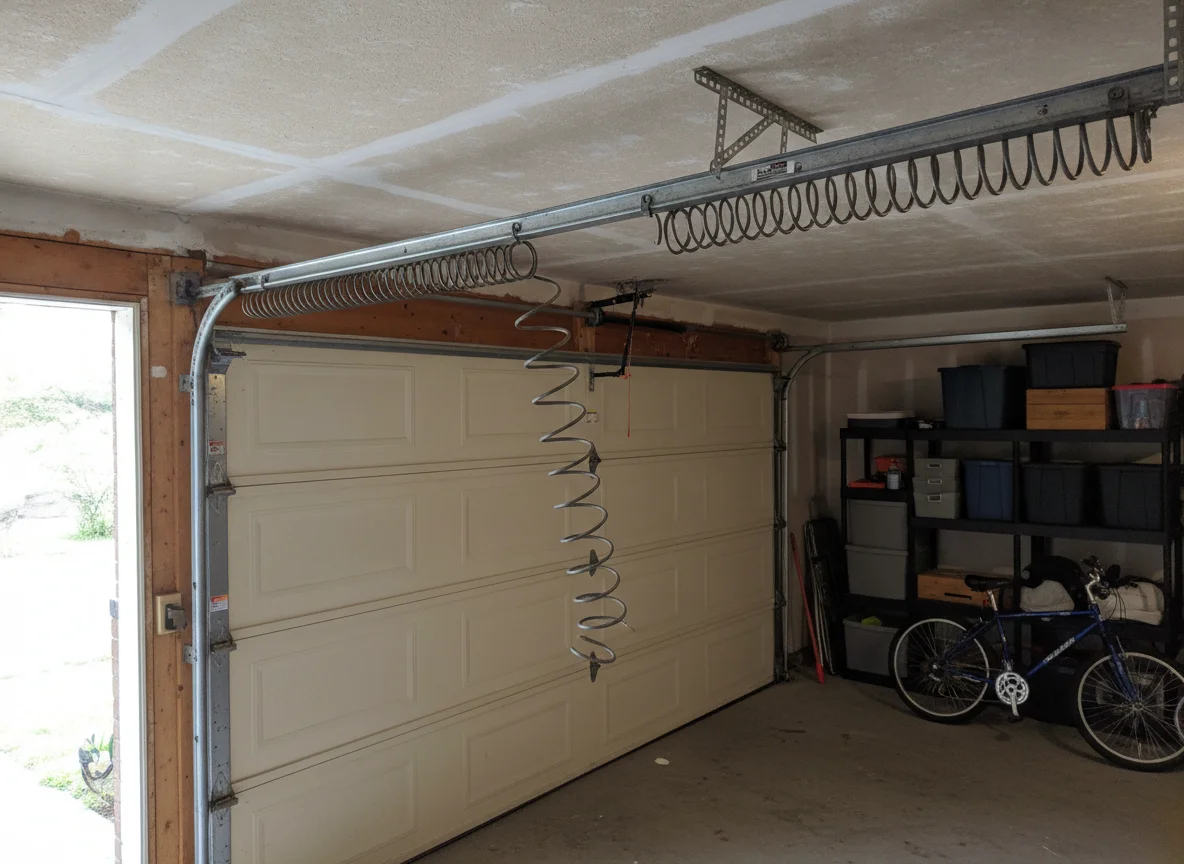
How to tell a spring has failed
A gunshot-like crack from the garage, frequently while nobody was near the door. Torsion springs carry the most tension with the door closed, which is why so many give out at that moment.
A split in the coil
Inspect the shaft above the closed door. A snapped torsion spring leaves a clean gap, usually a few inches across.
The door feels like dead weight, or sinks when you let go halfway.
The motor strains, hums, or raises the door an inch or two before quitting
Plenty of openers detect the extra load and back off, so it looks as if the motor is the culprit.
One side climbs ahead of the other as the door opens. On a door with a spring beside each track, one has gone slack.
The door crashes down through its last foot rather than easing shut.
Heard a crack and the door refuses to rise? Keep it shut and describe what you see over the opening.
Contact UsUntil the repair is done
A wound spring holds enough force to break bones, and a door with a failed one hangs its full weight on whatever else supports it. In the meantime:
Don't heave the door open by hand, and stop mashing the opener button
The motor wasn't made to lift that weight, and repeated attempts can chew through its gears.
Never yank the emergency release when the door is up
Without a spring to hold it, the door can crash down at its full weight.
Never attempt to loosen, wind or tweak a torsion spring
The winding cones contain the stored energy, which is where the worst injuries in this trade occur.
Children and pets should stay out of the garage; put the car on the street if the door is wedged partway.
Is a car stuck inside? Please say so when you reach out.
Torsion versus extension springs
Torsion springs ride on a steel shaft over the closed door, storing energy as they twist and turning the cable drums.
Most doors from the last few decades have them. Lifting is smoother than with extension springs, and a failure is less dangerous because the spring stays on its shaft.
Extension springs lie along the side tracks and stretch as the door comes down; older, lighter doors usually have them. A safety cable must pass through the length of each one, or a broken spring can whip across the garage and hit whatever is in its way.
Yours has none? Get that put right even if no spring has snapped so far.
Many older extension-spring doors can be converted to torsion springs, a fair thing to ask about while someone is already working on that door anyway.
What a spring repair involves
Measuring the snapped spring to match it
Gauge of the wire, inside diameter, length, and which way it winds. Get any one wrong and the door never balances.
The weight of the door is accounted for
The right spring is the one built for your door's load, not whichever is nearest.
The old spring is removed carefully, with its tension let off before a single bolt is undone.
The new spring goes on and is wound or set, and the drums and cables are inspected so both sides raise the door together.
Balance gets checked and tested
A balanced door stays put when stopped partway up, per the U.S. Consumer Product Safety Commission; it then runs cleanly on the opener.
Say what the door is doing
A line or two is enough to begin. You don't need to know which part has failed or what it's called.
Replace one or both?
If the door has a pair of springs, each has lifted it the same number of times. Once one snaps, the survivor tends to follow before long.
Doing both in one visit saves a second trip and keeps the door level, because a new spring working beside a worn one pulls unevenly.
Ask whoever you call what they advise for your door, and their reasoning. With a lone spring, ask whether two would suit the door better.
What shapes a spring repair quote
Spring type, and for torsion doors one spring or a pair.
Door dimensions and weight
A wide, wood or insulated door needs sturdier springs than a light one-car door, since it weighs more.
Rated cycle count
Manufacturers rate springs by lifetime cycles, one cycle being a full open and close. A higher rating costs more but outlasts the lower one when the door runs all day.
Other worn parts
Cables frayed at the drums, rollers that drag, or tired bearings on the shaft are cheaper to replace on the same visit, while the door is already apart.
Swapping an extension setup for torsion springs, if you decide to.
How long do springs last?
How often the door runs counts for more than how old it is. The same spring that survives years on a door opened twice a day gives out far sooner where the garage is the household's front entrance.
Cold stiffens spring steel, and Kingston's January average low is about 19 F, so many springs let go on the first hard-freeze mornings.
Springs went sooner than they should have? Ask about a higher-cycle spring.
The extra cost is typically minor beside a second repair.
When the spring is fine
Spring looks fine, but the door leans to one side or a cable dangles
Go to garage door cable repair.
No part has failed, but the door runs slow or noisy
The maintenance visit inspects springs well before they snap.
What people ask
Should I change a garage door spring on my own?
Extension springs, with safety cables fitted and the door fully raised and clamped, are something a few homeowners attempt.
Torsion springs aren't. Winding takes real winding bars and the exact spring for the door, and one slip lets the whole stored load out through your hands. The CPSC likewise says doors that bind or hang unbalanced are professional work.
Can I raise the door to drive my car out?
Not safely, not with a broken spring. Keep it closed and mention the car when you reach out.
The spring snapped while nobody touched the door. Why?
Steel wears down a little on every cycle, and a torsion spring is under its heaviest wind when the door is shut. That is why the last strand often goes then, helped by cold, which makes the steel brittle. Nothing else has to be wrong.
Do I need a new opener with a new spring?
Seldom. If the motor has been laboring against the broken spring, though, have its gears checked for stripping.
More garage door work
Garage Door Cable Repair
Frayed, snapped or slipped lift cables, plus doors that hang crooked.
Read more →Garage Door Opener Repair
Openers that hum, bounce back or stay silent, and new ones when mending isn't worth it.
Read more →Garage Door Maintenance
A service visit checking springs, cables, rollers and auto-reverse before any of them fails.
Read more →Reach out
Say whether the door is single or double, what you heard, whether it moves at all, and whether a car is stuck inside.
A photo of the spring over the opening, shot from the floor with the door shut, shows us the spring type and the break.